How Artificial Intelligence Is Shaping the Arts Today.
The Algorithmic Canon Critique
When AI training over represents Western European art, what gets erased and what gets replicated? Algorithms favor what is already popular or highly represented, leading to a lack of diversity. Underrepresented groups, marginalized voices, or less well-known works become even harder to discover.
For example, in art history, an AI algorithm trained mostly on Western museum collections might repeatedly recommend works by Picasso, Michelangelo, or Van Gogh, reinforcing the traditional Western canon while overlooking African, Indigenous, Asian, or female artists.
Can AI help return stolen art?
For decades, museums and scholars have struggled to trace artworks displaced by war, colonialism, and illicit trafficking. Today, artificial intelligence is emerging as a powerful tool in provenance research, helping institutions reconstruct ownership histories and identify objects that may have been looted.
Machine learning systems can analyze vast quantities of data far more quickly than human researchers alone. By cross-referencing auction catalogues, digitized archival documents, photographic databases, and museum inventories, AI can uncover connections that might otherwise remain hidden. Pattern-recognition algorithms are especially useful for matching historical photographs with objects currently in collections, even when descriptions or titles have changed over time.
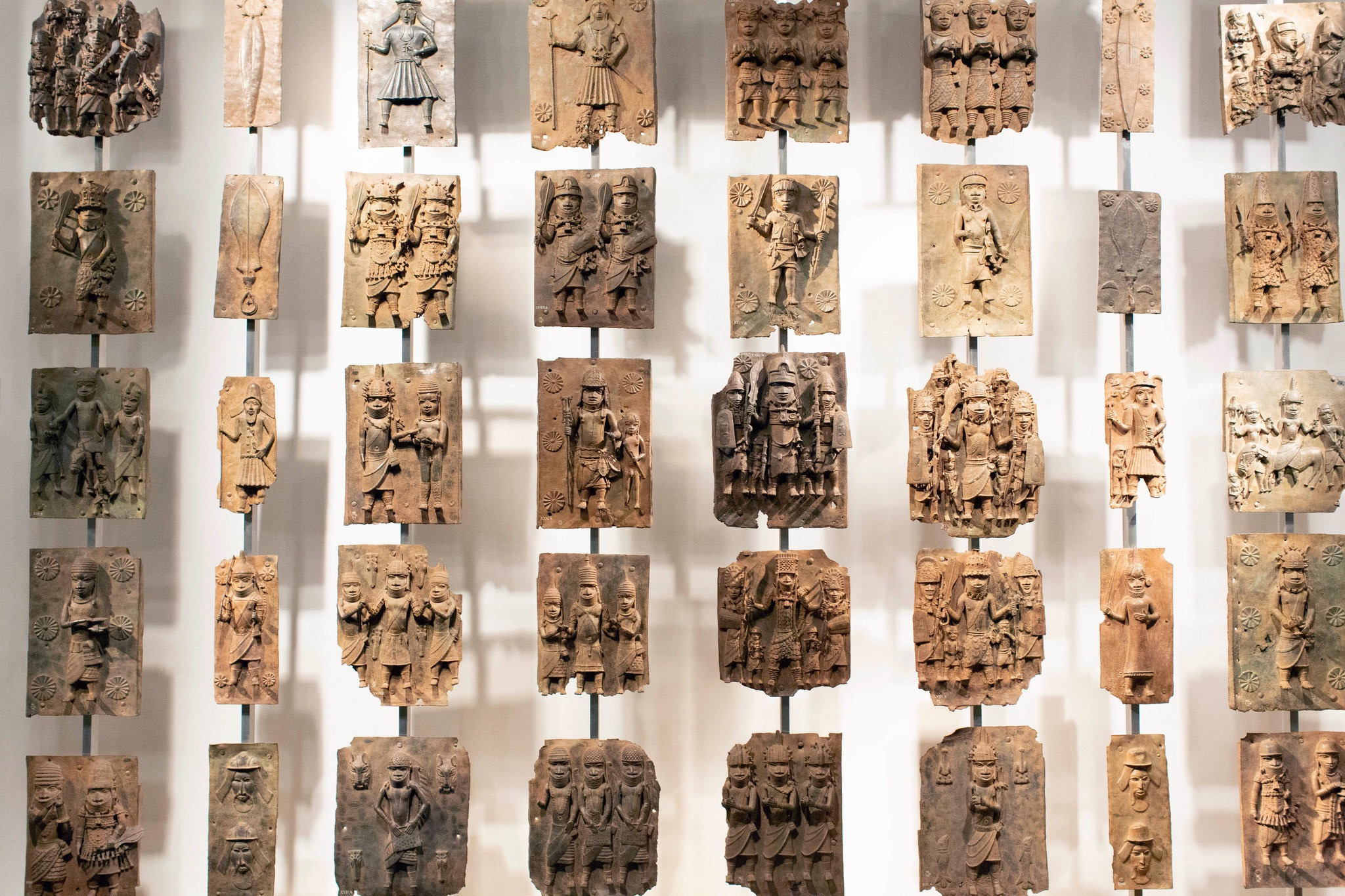
This technology has become particularly significant in efforts to recover art stolen during the Second World War and objects removed during the colonial era. Researchers have employed AI-assisted methods to identify Nazi-looted works and to reconstruct fragmented records destroyed by conflict. Similar approaches are increasingly being explored in relation to African cultural heritage, including the Benin Bronzes, whose presence in European museums has prompted intense debates over ownership and restitution.
Yet AI does not provide objective answers on its own. Algorithms depend on the quality and completeness of the archives they analyze, many of which reflect colonial systems of documentation and historical inequalities. Questions of repatriation ultimately involve legal, ethical, and political considerations that cannot be solved through technology alone. Rather than replacing historians, AI functions as a research assistant, expanding scholars' ability to investigate provenance while leaving interpretation and decisions about restitution in human hands.
By combining digital tools with historical expertise, museums are entering a new phase of accountability. The use of AI in provenance research demonstrates how technological innovation can intersect with art history, ethics, and global justice, making the past more visible and opening new possibilities for addressing historical wrongs.